
If plant tags feel like they’re written in a secret gardening language, you’re not alone.
“Full sun,” “partial shade,” and “shade” sound simple, until you’re standing on a balcony wondering if that counts as “sunny.”
The good news is you don’t need fancy tools to figure it out.
You just need to learn how your space “lights up” during a normal day, the same way you’d learn how your room looks at different hours.
Notice: this content is independent and has no affiliation, sponsorship, or control by any brands, nurseries, or platforms mentioned.
Plant performance varies by climate, season, building shade, and care, so use this as practical guidance rather than a guarantee.
Why light labels feel confusing in real life
Most “sun requirement” labels were created for outdoor gardens, where the sun moves across open sky.
But many of us are working with apartments, patios, porches, courtyards, and windows that behave like light mazes.
A single railing, roof overhang, or neighboring building can turn “full sun” into “bright shade” without you realizing it.
Direct light versus bright light, in a visual metaphor
Think of direct sun like a flashlight beam hitting your hand.
Think of bright shade like standing in a well-lit room with the curtains open, but no beam hitting you.
Plants that need full sun want the flashlight beam for hours, not just a bright room.
The balcony puzzle: reflections, overhangs, and “surprise shade”
Balconies can be trickier than yards because the sun can be blocked from above and from the sides.
A white wall can bounce light and make the area feel bright, even when direct sun is limited.
That brightness helps some plants, but it doesn’t replace true direct sunlight for sun-hungry bloomers and vegetables.
Full sun versus shade plants: the 10-second definition
Here’s the simplest way to translate plant labels into real life.
The key detail is this: the hours refer to hours of direct sunlight, not “daylight,” not “brightness,” and not “warmth.”
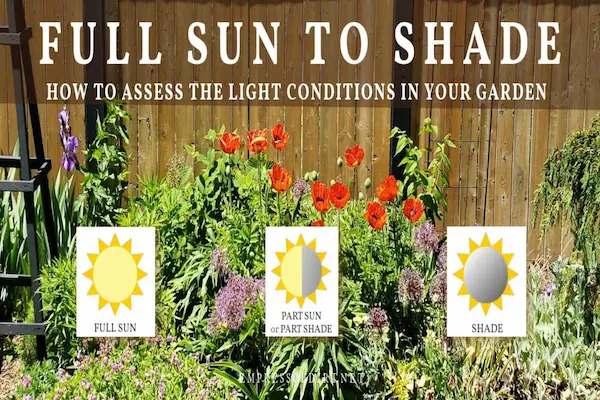
- Full sun usually means about 6+ hours of direct sun per day.
- Part sun often means about 4–6 hours of direct sun per day.
- Partial shade often means about 2–4 hours of direct sun per day, ideally gentler morning sun.
- Full shade usually means less than about 2 hours of direct sun per day, or mostly filtered light.
- Dappled shade means sun that “sprinkles through” leaves, like under a tree canopy.
- Bright shade means no direct beam, but the area is still well-lit for much of the day.
If you remember only one thing, remember this: sun requirements are about direct sun hours.
Everything else is a supporting detail.
Sun requirements are about energy, not temperature
A common trap is assuming “hot” equals “full sun.”
Heat and light often travel together, but they are not the same thing for plants.
Afternoon sun is not the same everywhere
Four hours of afternoon sun in a mild climate can be perfect for many plants.
Four hours of intense afternoon sun in a very hot summer can be punishing, even for plants labeled “full sun.”
That’s why you’ll often hear gardeners say “morning sun is gentler than afternoon sun.”
Glass changes the math for indoor plants
If you’re choosing plants for a window, remember that glass filters and changes sunlight in ways outdoor labels don’t describe.
A plant label that says “full sun” is usually talking about outdoor, open-sky sun, not sun behind a window all day.
That’s why many indoor plant guides use different language, like “bright indirect light.”
How to observe light levels along the day, without gadgets
You can solve most light confusion with one simple habit: watch where the sunbeam actually lands.
Don’t measure the room’s brightness first, measure the beam first.
- Pick the exact spot where your plant will live, like the corner of the balcony or the table near a window.
- On a normal day, check that spot in the morning, midday, and late afternoon.
- Each time you check, ask one question: “Is there a direct sunbeam touching this spot right now?”
- Write down the time range when the beam is present, even roughly, like “10:30–12:00.”
- Repeat for 2–3 days, because clouds and schedules can trick you on a single day.
- Add up the direct-sun hours, and match them to the plant’s sun requirements.
This is the “light map” method, and it works because it’s based on reality, not guesses.
It also helps you notice patterns like “only morning sun” or “a sharp blast of west sun.”
How to do the quick shadow test in 30 seconds
If you want a fast clue about whether the light is direct and strong, use your own shadow.
It’s not perfect, but it’s a great everyday check.
- If your shadow looks crisp with sharp edges, you’re in strong direct light.
- If your shadow is soft and blurry, you’re likely in bright shade or filtered light.
- If you barely see a shadow, you’re in deep shade or low indoor light.
Use the shadow test together with the light map, and you’ll stop second-guessing yourself.
Full sun versus shade plants: how to read plant labels without guessing
Plant labels can feel inconsistent because different growers use slightly different wording.
But most labels are pointing to the same core idea: how much direct sun the plant needs to thrive, bloom, and stay healthy.
Common label phrases and what they usually mean
- “Full Sun” usually means it wants lots of direct sun, often 6+ hours.
- “Full Sun to Part Shade” usually means it tolerates fewer hours, especially if afternoons are hot.
- “Part Sun / Part Shade” usually means it does best with a balanced day, like morning sun and afternoon shade.
- “Shade” usually means it prefers protection from strong direct sun, especially midday and afternoon sun.
- “Bright Indirect Light” is common for houseplants and usually means bright conditions without a direct beam for long periods.
When the label is vague, use plant behavior as a clue
Plants grown for flowers and fruit usually need more sun energy than plants grown for foliage.
That doesn’t mean shade plants never bloom, but it’s a helpful shortcut when labels are unclear.
If a plant is known for heavy flowering or fruiting, assume it needs stronger light unless the label clearly says otherwise.
Examples of full sun plants for patios, yards, and very sunny windows
Full sun plants are like solar-powered machines.
They use intense light to fuel blooms, fruit, and dense growth, and they often struggle when light drops too low.
Full sun edibles
- Tomatoes tend to perform best with lots of direct sun.
- Peppers generally like strong sun for best flowering and fruiting.
- Squash and cucumbers typically prefer bright, sunny conditions to produce well.
- Strawberries usually fruit best with plenty of sun, especially in containers.
Full sun herbs
- Basil typically grows fuller and more flavorful with strong light.
- Rosemary usually prefers bright sun and good drainage.
- Thyme and oregano are classic sun-loving, drought-tolerant herbs once established.
- Sage often performs best with strong light and airflow.
Full sun flowers that love bright days
- Zinnias are known for thriving in sunny spots and blooming heavily.
- Marigolds typically bloom best with strong sun and warm weather.
- Petunias often flower more with higher light levels.
- Geraniums (common bedding geraniums) typically prefer bright conditions and do well in containers.
Sun-loving ornamentals for containers
- Lavender generally prefers full sun and well-draining soil.
- Many succulents and cacti prefer very bright light and can struggle in shade.
- Sedum varieties often tolerate sun and dry conditions once established.
If your “sunny” spot is a window, start cautiously with full-sun outdoor plants indoors.
Some can adapt, but many were bred expecting outdoor intensity, airflow, and day-to-day temperature swings.
Partial shade plants that forgive imperfect light
Partial shade plants are the diplomats of the plant world.
They can work with a mixed schedule, like a few hours of sun and then a long stretch of bright shade.
A classic partial shade pattern is morning sun and afternoon shade.
This is especially useful in hot summers, because it protects leaves and flowers from the harshest rays.
Partial shade plants for outdoor containers and gardens
- Hydrangeas often do well with morning sun and afternoon protection, depending on climate and variety.
- Begonias are common choices for bright shade to partial shade in containers.
- Coleus is famous for colorful foliage and often prefers partial shade in many climates.
- Fuchsia generally appreciates partial shade and protection from hot afternoon sun.
Partial shade edibles for balconies
- Lettuce often tolerates and even appreciates partial shade, especially in warmer seasons.
- Spinach and many leafy greens can perform with fewer direct-sun hours than fruiting vegetables.
- Parsley can do well with moderate light and may handle partial shade better than sun-hungry herbs.
- Cilantro often appreciates some shade as temperatures rise, because it can bolt in heat.
If your space gets 2–4 hours of direct sun, partial shade plants can be your easiest win.
They’re often the best match for real-life patios where sun is interrupted by walls and railings.
Shade plants that truly cope with low direct sun
Shade plants don’t hate light.
They simply don’t want the harsh, prolonged beam that can scorch leaves and dry soil too quickly.
Shade also comes in flavors, and that matters.
A bright courtyard with no direct sun is very different from a dim corner where daylight barely reaches.
Outdoor shade plants
- Hostas are classic shade garden plants known for foliage interest in low direct sun.
- Many ferns prefer shade or dappled shade, especially with consistent moisture.
- Heuchera (coral bells) often does well in partial shade and can handle shade depending on variety and climate.
- Impatiens are commonly grown for shade to partial shade color in many regions.
Indoor “low light” houseplants (not the same as outdoor shade)
Indoor light is almost always weaker than outdoor shade because the sky is filtered by walls and glass.
That’s why many people succeed with sturdy foliage houseplants even when flowers struggle.
- Snake plant (Sansevieria) is widely known for tolerating lower indoor light, though it grows faster in brighter spots.
- ZZ plant (Zamioculcas zamiifolia) is also known for handling lower light with slow, steady growth.
- Pothos (Epipremnum aureum) can tolerate a range of indoor light levels and is often beginner-friendly.
- Many heartleaf philodendrons tolerate moderate to lower indoor light and adapt well to homes.
If you’re choosing indoor plants, think in terms of “bright indirect,” “medium,” and “low,” rather than outdoor sun labels alone.
If you’re choosing outdoor plants, stick to the direct-sun hours approach for the clearest match.
How window direction often affects light in U.S. homes
Window direction is a helpful shortcut, but it’s not the whole story.
Trees, neighboring buildings, porch roofs, and even window tint can change the outcome dramatically.
South-facing windows
South-facing windows often provide the strongest light over the day in many parts of the United States.
This is where “bright indirect” plants can thrive close to the window, and some higher-light plants can work with careful placement.
West-facing windows
West light is famous for being intense in the late afternoon.
It can be great for sun lovers, but it can also scorch leaves if a plant isn’t acclimated.
East-facing windows
East light is typically gentle morning sun, which many plants love.
It’s often ideal for plants that want some direct sun without the harsh afternoon blast.
North-facing windows
North light is often bright but indirect, with little direct sun in many situations.
It’s commonly a good match for foliage houseplants and plants that prefer lower direct light levels.
The top mistakes people make with full sun versus shade plants
Most plant disappointment is not about “having a black thumb.”
It’s about a mismatch between the plant’s label and the light reality of the spot you chose.
- Assuming “bright” equals “full sun,” even when direct sun hours are low.
- Counting cloudy daylight as sun hours instead of counting direct sunbeams.
- Forgetting that seasons change sun angles, so a spot can be sunny in summer and shaded in winter, or vice versa.
- Ignoring afternoon intensity, especially with west-facing exposure that can be harsh in warm climates.
- Placing a shade plant into strong midday sun and calling it “more light,” when it’s actually stress.
- Putting a full-sun flowering plant into partial shade and wondering why it grows leaves but won’t bloom.
- Reading plant labels as strict rules instead of starting points that depend on your climate and microclimate.
- Changing too many variables at once, like moving the plant, repotting, and changing watering all in the same week.
- Not giving plants time to acclimate, especially when moving from indoors to outdoors or from shade to sun.
How to tell if your plant needs more light or less light
Plants give clues, but you have to know what language they’re speaking.
The same symptom can sometimes come from different causes, so use light clues together with watering and temperature checks.
Common signs of too little light
- Long, stretched stems with big gaps between leaves can signal the plant is reaching for light.
- Slow growth during an otherwise active season can suggest the plant is underpowered.
- Few flowers, or flowers that drop quickly, can happen when flowering plants don’t meet sun requirements.
- Leaves may look smaller and paler in some plants when light levels are consistently low.
Common signs of too much direct sun
- Crispy, scorched patches on leaves can happen after a sudden jump into intense sun.
- Wilting that happens only during peak sun, then recovers later, can signal heat and sun stress.
- Bleached or faded leaf color can happen when the plant is overwhelmed by strong light.
The “one change rule” for troubleshooting
When a plant struggles, change one thing at a time so you can see what helped.
If you move it to a brighter spot, keep watering habits consistent for a couple weeks so you can read the plant’s response clearly.
A simple decision system to pick the right plant for your light
If you want a no-drama way to choose plants, use this quick decision tree.
It keeps you grounded in real light levels instead of hopeful guessing.
- Do the light map and estimate direct sun hours for your chosen spot.
- If you have 6+ hours of direct sun, start with full sun plants and full-sun edibles.
- If you have 4–6 hours, choose part sun or “full sun to part shade” plants, and expect decent flowering with good care.
- If you have 2–4 hours, lean into partial shade plants and leafy edibles, especially if afternoons are hot.
- If you have under 2 hours, choose shade plants outdoors or low-light tolerant houseplants indoors.
- If you are between categories, choose the more forgiving option, then adjust placement by small distances as needed.
This is also the safest way to shop, because it makes plant labels feel like helpful instructions instead of confusing suggestions.
Quick FAQ about sun requirements and light levels
Is “partial shade” the same as “shade”?
Not usually.
Partial shade generally means some direct sun is okay, often for a few hours, especially in the morning.
Shade often implies little direct sun, or protection from strong midday sun, depending on the plant label.
What if my space gets sun in “patches”?
Count the total hours the spot receives direct sun, even if it’s broken into chunks.
Many plants respond to total energy over the day, but very intense chunks can still scorch sensitive plants.
Can I “train” a shade plant to live in full sun?
Some plants adapt a little, but most shade-loving plants will look stressed in intense, prolonged sun.
If you want to experiment, acclimate slowly by increasing sun exposure over days or weeks, and watch for scorch.
Why does the plant label say “full sun” but the leaves scorch?
“Full sun” doesn’t mean “throw it into extreme sun instantly.”
New plants often need gradual acclimation, and hot climates can require afternoon protection even for sun-labeled plants.
Do grow lights replace sun?
Grow lights can help indoors, especially for herbs and houseplants, but results depend on light intensity and duration.
If you’re sticking to natural light only, the light map method is still your best guide for choosing the right plant.
Wrap-up: your home already has a “light personality”
Your space is not “good” or “bad” for plants.
It simply has a light personality, like a room that’s cozy in the morning and moody at night.
Once you learn that personality, choosing full sun versus shade plants becomes almost obvious.
Map your direct sun hours, trust what you observe, and let plant labels work for you instead of against you.
If you want the easiest first win, pick a plant that matches your light category exactly, not one that “might tolerate it.”
Success builds momentum, and momentum turns gardening into something you actually look forward to.