
Learn seed starting indoors basics with trays, light, moisture control, and a simple care timeline to transplant success.
Starting seeds indoors feels like a small act of optimism, because you are building spring in miniature while the outside world is still undecided.
With a simple setup and a patient routine, indoor seed starting becomes less like “guessing” and more like repeating a few essential steps until they feel natural.
Seed Starting Indoors Basics: Why Starting Inside Changes Your Whole Season
Notice: this content is independent and has no affiliation, sponsorship, or control over any entities, brands, labs, retailers, or third-party platforms mentioned.
Indoor seed starting gives you control over timing, which matters when you want harvests earlier, longer blooms, or a head start on slow-growing varieties.
Growing from seed also expands your options, because unusual colors, interesting flavors, and regionally adapted varieties often show up more in seed catalogs than on nursery benches.
Better scheduling is another quiet advantage, since you can start a few plants now, start a few more later, and avoid the stressful rush of transplanting everything at once.
Money can stretch further too, because a handful of seeds can produce dozens of plants if your routine is consistent and your germination conditions stay stable.
- Earlier harvests happen because seedlings are already growing when outdoor soil is still too cold for direct sowing.
- Stronger plants develop when light, moisture, and airflow are balanced from the start rather than left to unpredictable weather.
- More variety becomes realistic when you can start “just a few” of several cultivars instead of buying full packs of nursery plants.
- Better resilience shows up when you harden off gradually, because indoor-grown seedlings can be trained to handle sun and wind with less shock.
Choose Seeds With Intention So the Process Stays Simple
Smart seed choices reduce frustration, because the easiest indoor wins come from plants that transplant well and reward you quickly.
Warm-season crops like tomatoes, peppers, eggplants, and many flowers often benefit from indoor starting, since they grow slowly at first and dislike cold soil.
Fast direct-sowers like beans, peas, carrots, and many greens can be started indoors, yet they often do better when sown outside because their roots dislike disturbance.
Seed packets are your first teacher, since they usually include days to germination, planting depth, ideal temperature range, and a recommended start time.
Older seed can still sprout, though germination rate tends to decline over time, so starting a few extra seeds is a practical safety net instead of a failure.
- Begin with 2 to 4 “must-have” crops, because a smaller plan is easier to keep evenly watered and evenly lit.
- Add experiments later, because adding complexity after you build confidence prevents your trays from turning into a stressful science fair.
- Choose at least one quick success, such as basil or marigolds, because early wins keep motivation high during the slower weeks.
- Check whether a plant “transplants well,” because taproot-heavy plants often prefer being sown where they will live.
Quick seed-selection checklist for beginners
- Pick varieties that match your daylight, because sun-loving crops struggle in shade even with perfect seed starting.
- Confirm the “weeks before last frost” note if it is listed, because that line often solves the timing puzzle instantly.
- Start fewer seeds than you think you want, because caring for healthy seedlings is easier than rescuing overcrowded trays.
- Label everything immediately, because memory fades faster than seedlings grow, especially once the first green loops appear.
Seed Starting Indoors Basics: The Minimal Setup That Still Works Beautifully
A simple indoor setup succeeds when it creates three conditions at the same time: consistent moisture, steady warmth, and bright light close to the seedlings.
Many seed starting problems come from missing only one of those conditions, so focusing on the essentials prevents expensive detours.
Space matters less than consistency, because a small shelf with reliable light and routine care beats a huge, chaotic area that dries out unpredictably.
- Seed trays or small pots provide structure, because they keep moisture and roots contained in a manageable way.
- Seed-starting mix supports germination, because it drains well while staying evenly moist around a tiny seed.
- Labels prevent confusion, because seedlings look similar for weeks and mistakes multiply quickly.
- A light source supports sturdy growth, because windows rarely provide enough intensity or duration for stocky seedlings.
- A waterproof tray protects surfaces, because spills are part of the learning curve rather than a reason to quit.
Seed trays, cells, and containers explained without the overwhelm
Cell trays are popular because they are tidy, predictable, and easy to bottom-water, which makes your moisture routine more consistent.
Open trays with soil blocks can work well too, although they reward careful watering and spacing since seedlings share one large moisture zone.
Small pots are useful for larger seeds or for plants that will stay indoors longer, because extra soil volume buffers drying and reduces early root crowding.
Reused containers can be fine if they are cleaned and have drainage holes, because drainage is non-negotiable for healthy roots and disease prevention.
- Use smaller cells for quick crops that will transplant early, because short indoor time means less risk of root binding.
- Use larger cells or pots for slower crops, because peppers and some perennials appreciate extra space before the move outside.
- Choose sturdy trays if you plan to reuse them, because flimsy trays crack when you lift them full of wet soil.
- Add a bottom tray with no holes, because it catches water and makes bottom-watering simple and tidy.
Growing medium basics for clean germination and strong roots
Seed-starting mix is usually lighter and finer than garden soil, because seeds need both moisture and air, and heavy soil can suffocate them.
Garden soil often brings weeds and clumps indoors, so using it in seed trays creates problems that feel mysterious but are actually predictable.
Moistening the mix before filling cells helps, because dry mix can repel water at first and create uneven wet pockets that confuse germination.
- Aim for “wrung-out sponge” moisture, because dripping-wet mix compacts easily and starves seedlings of oxygen.
- Break up chunks gently, because fine contact between seed and mix supports steady hydration during germination.
- Skip fertilizer at sowing time, because most seeds carry enough energy to sprout before they need extra nutrients.
Germination Steps That Feel Calm, Repeatable, and Reliable
Successful germination is rarely luck, because germination is simply a set of environmental triggers that you can provide in a predictable way.
Even tiny seeds become less intimidating when you follow the same method every time, since repetition removes the mental drama.
- Pre-moisten your seed-starting mix, because evenly damp soil prevents dry pockets that stall sprouting.
- Fill cells or pots loosely, because compressed mix slows root growth and reduces oxygen around germinating seeds.
- Tap the tray gently to settle large air gaps, because you want contact without turning the surface into a brick.
- Create shallow planting holes or furrows, because consistent depth leads to more even emergence across the tray.
- Place seeds according to size, because tiny seeds need light or very shallow coverage while larger seeds prefer deeper contact with moisture.
- Cover seeds lightly if the packet suggests coverage, because the goal is protection and moisture retention, not heavy burial.
- Mist the surface or water gently, because strong streams can wash small seeds into corners and ruin spacing.
- Label immediately with variety and date, because timing and identity are the two pieces of information you will rely on later.
- Tiny seeds often prefer being pressed into the surface, because light can support germination for some species.
- Medium seeds typically like coverage around two times their thickness, because that depth balances moisture access and easy emergence.
- Large seeds usually tolerate deeper planting, because they have more stored energy and benefit from more stable moisture.
Moisture management that prevents both drying and drowning
A humidity dome or a simple plastic cover can help at first, because it slows evaporation while seeds are waking up and roots are not yet drinking deeply.
Ventilation becomes important right after sprouting, since constant trapped humidity can encourage mold, algae, and the conditions that lead to damping-off.
Bottom-watering is a beginner-friendly habit, because it draws water upward without splashing stems and without crusting the surface.
- Cover the tray during germination if your home air is dry, because consistent moisture speeds sprouting for many seeds.
- Check daily for the first sprouts, because seedlings change quickly and domes should not stay closed once green appears.
- Remove the dome or open vents gradually, because sudden exposure can dry delicate sprouts before roots are established.
- Water from below when possible, because it encourages deeper roots and reduces surface fungus.
- Let excess water drain after bottom-watering, because roots need oxygen as much as they need water.
- Dry topsoil can still hide moist lower layers, so checking weight by lifting one corner of the tray helps you avoid overwatering.
- Soggy soil often smells stale, so paying attention to odor can guide you before problems become visible.
- Even moisture looks boring, yet boring is exactly what you want during germination and early seedling growth.
Temperature: the quiet lever behind faster, more even sprouting
Warmth signals many seeds to begin, so keeping the tray in a stable temperature zone often improves germination more than any special product.
Heat mats can be helpful for warm-season crops, although you can also use naturally warm spots, like the top of a refrigerator, if you monitor moisture carefully.
Cool-season crops usually do not need extra heat, and too much warmth can sometimes reduce germination for seeds that prefer cooler soil.
- Tomatoes and peppers often germinate faster with gentle warmth, because their native cues point toward warm soil conditions.
- Lettuce and some herbs can prefer cooler starts, because high temperatures may slow or reduce germination for certain varieties.
- Nighttime temperature swings can slow sprouting, so choosing a stable indoor location is a practical advantage of starting inside.
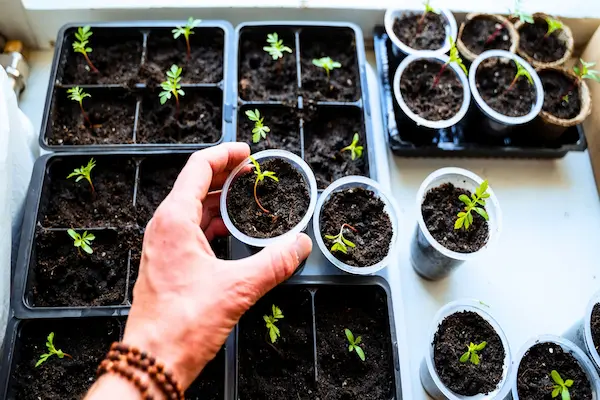
Grow Lights: The Difference Between Strong Seedlings and Leggy Ones
Light is the make-or-break factor once seedlings emerge, because weak light triggers stretching as plants search for a brighter “sky.”
Window light can be beautiful for houseplants, yet seedlings usually need brighter, longer, and more direct light than most windows can provide in late winter.
Grow lights do not need to be complicated, since your goal is simply to deliver enough intensity close to the leaves for enough hours each day.
- LED shop-style lights work for many gardeners, because they are efficient and can be positioned close without much heat.
- Adjustable height matters more than fancy features, because distance to the seedlings strongly affects intensity.
- A simple timer supports consistency, because steady day length reduces stress and helps seedlings grow predictably.
- Reflective surroundings can help, because light that bounces back reduces leaning and improves overall uniformity.
Light distance and schedule without the technical math
Keeping lights close encourages compact growth, so aiming for a small gap above the leaves and raising the fixture as plants grow is a practical rhythm.
Seedlings typically thrive with long, consistent days indoors, since indoor light intensity is lower than sunlight even when your fixtures are decent.
- Turn lights on for a long daily stretch, because many seedlings respond well to a generous indoor “day.”
- Give darkness at night, because plants still benefit from a rest period that supports normal growth cycles.
- Raise the light as leaves approach, because scorching is rare with many modern fixtures but crowding can still stress tender tops.
- Rotate trays if growth leans, because slight unevenness in light coverage happens even in good setups.
- Watch the seedlings, because leaf color and stem thickness tell you more than any rule of thumb.
- Leggy seedlings usually mean light is too far away or not on long enough, so correcting light often fixes the problem quickly.
- Bleached patches can suggest light or heat stress, so increasing distance slightly can calm growth without sacrificing sturdiness.
- Leaning toward one side often means uneven coverage, so rotating trays can bring symmetry back within a few days.
Watering and Airflow: Two Habits That Prevent Most Indoor Seed Problems
Indoor seedlings live in a small, humid world, so airflow becomes a protective tool that helps stems strengthen and reduces fungal issues.
A gentle fan can simulate a breeze, although even regular room movement and careful spacing can help if you avoid packing trays too tightly.
Watering becomes easier when you follow a rhythm, because guessing leads to cycles of soaking and drying that stress roots and invite disease.
- Bottom-water when possible, because it keeps stems drier and encourages deeper roots.
- Water in the morning, because surfaces dry sooner and the seedling area stays less humid overnight.
- Space trays slightly apart, because airflow between them reduces the “greenhouse fog” that mold loves.
- Remove weak seedlings early, because overcrowding invites competition and slows the best plants.
Damping-off explained in plain language
Damping-off is a common seedling failure where stems collapse at the soil line, and it often shows up when soil stays too wet with too little airflow.
Prevention is far easier than rescue, since affected seedlings rarely recover once the stem tissue has been compromised.
- Improve airflow first, because moving air reduces the damp stillness that fungal organisms favor.
- Let the surface dry slightly between waterings, because constantly saturated mix limits oxygen around young roots.
- Use clean containers and fresh mix, because pathogens can hitchhike in leftover debris from past seasons.
- Avoid heavy fertilizer early, because stressed seedlings are more vulnerable to collapse and rot.
- Thin crowded patches, because dense seedlings trap moisture and reduce air circulation at soil level.
Feeding Seedlings Gently So Growth Stays Steady, Not Spiky
Seeds contain the first fuel a plant needs, so feeding too early is often unnecessary and can create more problems than it solves.
Once true leaves appear, many seedlings appreciate a mild nutrient supply, because the seed’s stored energy is no longer the whole story.
Light feeding is usually enough, since strong light and consistent watering matter more for sturdy growth than heavy nutrients at this stage.
- Wait for true leaves, because the first “seed leaves” are starter structures, not a signal that the plant is ready for richer feeding.
- Dilute fertilizer heavily if you use it, because seedlings are sensitive and excess salts can burn roots in small containers.
- Feed less often than you think, because steady, mild nutrition supports compact growth better than occasional strong doses.
- Mix a mild feeding solution only after true leaves develop, because that timing aligns with the seedling’s increasing demand.
- Apply after watering or alongside bottom-watering, because nutrients move more evenly in already-moist media.
- Observe leaf color over the next week, because deep green can mean “enough,” while pale growth may signal the need for slightly more support.
- Adjust gradually, because sudden changes make it hard to understand what helped and what hurt.
- Stop feeding right before transplant if plants look lush, because slightly “lean” seedlings often harden off more smoothly.
Potting Up: A Simple Upgrade When Seedlings Outgrow Their First Cells
Potting up means moving seedlings into a slightly larger container, and it can be the difference between stalling plants and seedlings that keep gaining strength.
Roots signal readiness when they fill the cell, when growth slows despite good light, or when watering becomes frequent because the small soil volume dries too quickly.
Some crops handle potting up easily, while others prefer minimal disturbance, so treating this step as optional keeps the process beginner-friendly.
- Tomatoes often tolerate potting up extremely well, because they can develop roots along buried stems.
- Peppers can benefit from potting up, because they may stay indoors longer before outdoor temperatures become friendly.
- Cucumbers and squash usually dislike root disturbance, so starting them later in slightly larger pots can be easier than potting up.
- Water the seedlings a little beforehand, because slightly moist roots slide out with less tearing.
- Prepare new containers with fresh mix, because reusing old mix can introduce compaction and uneven moisture behavior.
- Lift seedlings by leaves, not stems, because stems bruise easily and leaves can regrow if damaged.
- Set the seedling at an appropriate depth, because too shallow dries faster while too deep can stress sensitive stems for some plants.
- Water gently after transplanting, because settling soil around roots removes air gaps without compacting the container.
A Basic Care Timeline From Sowing Day to Transplant Day
Timing feels complicated until you anchor everything to one reference point, and that reference point is usually your local last frost date.
Seed packets often list “start indoors X weeks before last frost,” which is a helpful guideline even if your microclimate runs a little warmer or cooler.
Different crops need different lead times, so planning by groups keeps your setup manageable instead of starting everything on one ambitious weekend.
Simple planning method using “weeks before last frost”
- Write down your approximate last frost date, because that date becomes the calendar spine for your whole indoor schedule.
- List the crops you want to start indoors, because seeing them together helps you avoid starting too many trays.
- Group seeds by recommended start window, because sowing in waves keeps lighting space and daily care realistic.
- Add a buffer week if you are new, because small delays happen and seedlings often forgive slightly later starts better than overcrowding.
- Plan hardening off time, because seedlings need a transition period that is just as important as germination itself.
What to do in each phase, in plain steps
- Day 0 to Day 7: Keep warmth and moisture steady, because germination depends on stable triggers more than anything else.
- First sprouts appear: Remove or vent covers and provide bright light, because the seedling’s first mission is to build a sturdy stem.
- Week 2 to Week 3: Encourage airflow and start gentle bottom-watering, because roots are expanding and oxygen matters more each day.
- After true leaves: Consider mild feeding and thinning, because stronger individuals need space and light to become transplant-ready.
- When roots fill cells: Pot up if needed, because growth stalls when root space is too tight for the plant’s pace.
- One to two weeks before transplant: Begin hardening off, because outdoor light and wind feel intense compared to indoor conditions.
Hardening Off and Transplanting Without Shock
Hardening off is the process of teaching indoor seedlings to handle outdoor sun, wind, and temperature swings, and skipping it is a common reason seedlings struggle after transplant.
Gradual exposure strengthens leaf tissue and reduces sunscald, which helps plants transition smoothly instead of pausing for weeks in recovery mode.
Transplant day becomes easier when you prepare soil and timing, since a calm, cloudy day or late-afternoon move reduces stress dramatically.
- Start with short outdoor sessions in shade, because seedlings need time to adjust before meeting full sun.
- Increase time outside daily, because gradual steps build resilience with less risk of wilting or scorched leaves.
- Introduce morning sun before afternoon sun, because afternoon sun is harsher and can overwhelm tender indoor leaves.
- Reduce indoor pampering slightly, because a small dip in comfort helps seedlings adapt without pushing them into collapse.
- Transplant when soil and nights are appropriate for the crop, because warm-season plants resent cold soil even if the air feels pleasant.
- Water the planting hole or the bed lightly, because moist soil welcomes roots and reduces immediate stress.
- Handle roots gently, because damaged roots slow establishment and can mimic nutrient deficiency later.
- Shade briefly after transplant if sun is intense, because temporary protection can prevent a setback during the first critical days.
- Label plantings outdoors too, because variety performance notes become valuable when you plan next season’s indoor starts.
Troubleshooting: Common Indoor Seed Starting Problems and Calm Fixes
Problems feel personal at first, yet most issues come from a few predictable causes, so diagnosis becomes easier as soon as you match symptoms to conditions.
Keeping notes helps here, because the moment you record temperature, watering pattern, and light distance, patterns become visible without guesswork.
Poor germination
- Old seed can be the culprit, so sowing a few extras or testing a small batch first can save space and disappointment.
- Inconsistent moisture often slows sprouting, so pre-moistening mix and covering trays during germination can stabilize conditions.
- Incorrect depth can block emergence, so using a gentle rule based on seed size keeps depth more consistent.
- Wrong temperature can stall germination, so adjusting location or adding mild warmth can improve results quickly.
Leggy seedlings
- Insufficient light is the main cause, so bringing lights closer and extending daily light time often fixes stretching within days.
- Overcrowding contributes too, so thinning and spacing reduces competition and encourages thicker stems.
- Still air can weaken stems, so gentle airflow can stimulate stronger structure as seedlings grow.
Yellowing leaves
- Overwatering can reduce oxygen, so letting the mix dry slightly and improving airflow often restores healthy color.
- Underfeeding after true leaves can play a role, so a mild feeding schedule can help if light and watering are already solid.
- Cold drafts can stress seedlings, so moving trays away from chilly windows at night can improve growth consistency.
Mold on the soil surface
- High humidity without airflow usually drives mold, so venting covers and adding gentle air movement is the first response.
- Surface stays wet when watering is too frequent, so bottom-watering and letting the top dry slightly can shift conditions quickly.
- Thin mold is often cosmetic, yet persistent mold signals that the environment is too damp for long-term seedling health.
Fungus gnats
- Gnats thrive in wet media, so improving drying cycles and avoiding constantly saturated trays reduces their breeding success.
- Bottom-watering helps, because it keeps the surface drier where adults like to lay eggs.
- Sticky traps can reduce adults, although the long-term solution is moisture balance rather than chasing insects endlessly.
Seed Starting Tips That Keep the Process Enjoyable, Not Overwhelming
Enjoyment matters because consistency is everything, and consistency is easier when the routine feels doable on busy days.
Small adjustments work better than dramatic changes, since seedlings respond to stability more than sudden “rescue missions.”
- Start fewer trays than your excitement suggests, because caring well for a small number of seedlings builds confidence quickly.
- Set a daily two-minute check-in, because tiny, regular attention prevents the big problems that take hours to fix.
- Thin seedlings earlier than you want to, because one strong plant outperforms three weak ones fighting for the same light.
- Use a consistent labeling system, because good records turn this season into a blueprint for next season.
- Celebrate the first true leaves, because that milestone usually marks the shift from “sprouting” to “growing.”
Simple Optional Upgrades If You Want to Improve Results Later
Upgrades are most helpful after you run one full season, because you will know exactly which part of the process felt hardest in your home.
Heat mats can speed germination for warm-season crops, though they are not required if your indoor temperatures are already stable and comfortable.
Better shelving can save space, and reflective surfaces can improve light efficiency, yet neither is necessary to learn the core skills.
- A timer is a high-impact upgrade, because it protects your routine from forgetfulness without adding complexity.
- A small fan is often worthwhile, because airflow strengthens stems and reduces fungal pressure in humid seedling environments.
- Deeper cell trays can help for longer indoor grows, because extra root space reduces the urgency of potting up.
- A simple heat mat can be useful for peppers, because warmer soil temperatures often improve both speed and uniformity of sprouting.
Seed Starting Indoors Basics: A Simple Checklist You Can Reuse Every Season
Checklists reduce stress because they turn many small decisions into one familiar flow, which is exactly what beginners need when seedlings start changing daily.
- Choose a small set of seeds that transplant well, because manageable scope keeps your first season enjoyable.
- Prepare clean trays with seed-starting mix, because good drainage and consistent moisture are the foundation for germination.
- Sow at appropriate depth and label immediately, because depth and identity are the two details that most often get mixed up.
- Maintain warmth and steady moisture until sprouting, because germination depends on stable triggers rather than constant tinkering.
- Provide bright grow lights close to seedlings, because compact growth is the signature of good indoor conditions.
- Bottom-water and add airflow, because healthy roots and healthy stems both depend on oxygen.
- Feed gently after true leaves if needed, because mild nutrition supports steady growth without creating fragile seedlings.
- Pot up only when roots demand it, because unnecessary handling can slow plants that were growing well already.
- Harden off gradually, because outdoor sun and wind require training, not sudden exposure.
- Transplant calmly and keep notes, because your observations become next season’s shortcut to even better results.
Final Encouragement for Your First Indoor Starts
Indoor seed starting rewards patience, because the best results come from steady light, steady moisture, and small daily observations rather than constant course-corrections.
Confidence grows quickly once you see your first sturdy seedlings, because that moment proves you can guide a plant from a dry seed to a thriving transplant with your own hands.
If something goes sideways, treat it as information and consider professional local guidance when necessary, because learning the “why” is what turns a hobby into a skill.