
Growing plants can feel like a secret club when you have already “killed everything,” yet the truth is that beginners fail for totally normal reasons.
This beginner-friendly guide removes the mystery by turning gardening into a handful of clear decisions you can repeat with confidence.
Notice: This content is independent and has no affiliation, sponsorship, or control by any entities mentioned.
Gardening basics for beginners: why “I have no talent” is the wrong diagnosis
Most plant deaths are not proof that you are hopeless, because they usually come from mismatched light, inconsistent watering, or using the wrong soil in the wrong container.
Confidence grows faster when you treat each plant like a small experiment that teaches you one lesson, rather than a final exam you must pass perfectly.
Progress becomes obvious once you stop aiming for “perfect plants” and start aiming for “repeatable habits” that fit your real schedule and space.
Patience matters because plants respond slowly, so a good gardener is often just someone who waits long enough to see what changed.
Success also comes from noticing patterns, like which spots dry faster, which windows are brighter, and which containers stay wet too long after watering.
Relief arrives when you realize that even experienced gardeners lose plants, restart seedlings, and change plans when weather or timing does not cooperate.
What gardening actually is, in plain language
Gardening is simply helping a plant meet its needs for light, water, air, nutrients, and temperature, while protecting it from extreme stress.
Everything you do, from choosing a pot to adding mulch, is basically a way to balance moisture, oxygen, and nutrition around the roots.
Learning becomes easier when you remember that roots breathe, leaves drink light, and stems transport water like tiny pipes inside the plant.
Once those basics click, you stop chasing random tips and start making choices that match what the plant is built to handle.
Beginner garden guide mindset: the five questions that solve most confusion
Before buying anything, ask five questions that keep you from wasting money on plants that were never likely to work in your conditions.
- Which direction does the light come from, and how many hours is the spot truly bright?
- How often can you realistically check moisture, even during busy weeks?
- Will the plant live in a pot, a raised bed, or the ground, and how much root space will it get?
- What kind of climate stress shows up where you live, such as heat waves, heavy rain, wind, or cool nights?
- Do you want edible results, flowers, greenery, or simply the satisfaction of keeping something alive?
Clarity improves because each answer narrows the options, which means you stop picking plants based on looks alone and start picking based on fit.
Practical gardening is about matching, not forcing, because forcing usually means constant rescue mode, while matching means plants do most of the work.
Motivation stays high when you choose early wins, since a few thriving plants create momentum that makes the next step feel exciting instead of intimidating.
Start gardening by choosing your “difficulty level” on purpose
Begin with plants that forgive inconsistency, because forgiving plants give you time to learn what “too wet” and “too dry” look like in your home.
Keep the first season simple, because juggling ten new plants at once makes it hard to see which change helped and which change hurt.
Build skill like stacking blocks, since a stable routine with two plants is stronger than a chaotic routine with twenty plants.
Start gardening with three decisions that shape everything else
Every first garden is easier when you decide your location, your plant type, and your container style before you fall in love with something at the store.
Decision 1: pick a location you will actually see often
Place your first plants where you naturally spend time, because visibility is the easiest reminder system and reminders are half of beginner success.
Choose a spot that fits your routine, like near the kitchen sink for herbs or near the door for outdoor pots you check when you come home.
Decision 2: choose a plant category that matches your patience
Herbs and leafy greens reward you quickly, while shrubs and fruit trees teach long-term thinking, so pick the timeline that keeps you engaged.
Flowers can be fast and motivating, while houseplants can be steady and forgiving, so the “best” choice is what you will enjoy caring for.
Decision 3: decide between pots, raised beds, or in-ground planting
Pots give control and mobility, raised beds improve soil and access, and in-ground planting can be low maintenance once established, so each option has a different kind of ease.
Early confidence often comes from small containers, because you can learn watering and sunlight without committing to a permanent garden layout.
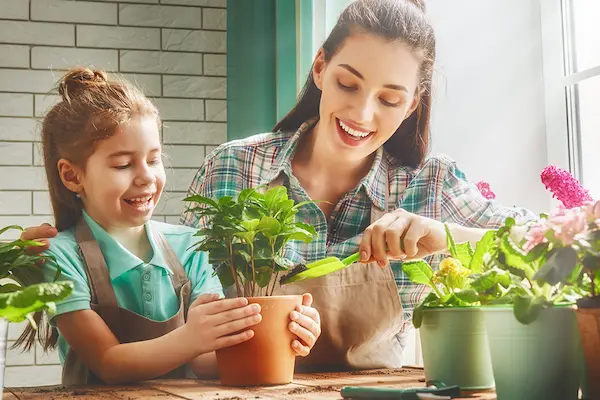
First garden steps: a beginner-friendly checklist you can follow today
Action becomes simpler when you treat your first attempt like a short project with clear steps, rather than a giant lifestyle change.
- Pick one growing area, such as a single sunny window, a balcony corner, or a small patch near your door.
- Observe that spot for light over two days, noting morning sun, midday brightness, and late-afternoon shade.
- Choose one goal, like “fresh herbs,” “easy flowers,” or “a small salad container,” so choices stay focused.
- Select two to three beginner plants that match the light you observed, instead of trying to make the light match the plants.
- Buy the right growing medium for the container type, because correct soil is a bigger factor than fancy fertilizer early on.
- Use containers with drainage holes, since trapped water is one of the fastest ways to lose a beginner plant.
- Water thoroughly once, then pause and learn the dry-down pattern before watering again on a fixed schedule.
- Add a simple reminder system, like checking moisture every two days, rather than promising yourself daily perfection.
- Write down what you did and when, because notes turn confusion into learning when something looks “off.”
- Adjust one variable at a time, such as moving the pot closer to light, before changing soil, water, and fertilizer all at once.
Consistency matters more than intensity, so a small routine done repeatedly beats a complicated routine you abandon after a week.
Kindness toward yourself helps, because guilt makes people quit, while curiosity makes people keep experimenting until something finally clicks.
Gardening basics for beginners: pots vs garden beds without the debate
Choosing between pots and beds feels confusing until you compare them by control, effort, cost, and how often you need to water.
When pots are the easiest first move
Pots are beginner-friendly because you can control the soil, move the plant for better light, and isolate problems like pests or overwatering.
Small containers dry faster, which sounds scary, yet it also reduces root rot risk when you are still learning how to judge moisture.
Balconies and patios work well with pots, because you can create a “mini garden” even when you have no yard at all.
- Choose pots with drainage holes and a saucer, so water can exit and your surfaces stay protected.
- Prefer lighter containers if you may need to move them, because heavy wet soil becomes hard to handle quickly.
- Start with medium sizes, since tiny pots dry in hours and huge pots can stay wet for too long.
When beds or in-ground planting make more sense
Garden beds can be simpler in the long run because soil volume is larger, temperature swings are smaller, and plants have more room to develop roots.
Raised beds often help beginners because they improve drainage and soil quality, while also being easier on your back and knees.
In-ground planting is powerful when your native soil is decent and you want low daily maintenance, since established plants often need less frequent watering.
- Start small with one bed section, because a giant bed can become overwhelming before your routine is stable.
- Improve soil gradually with compost and mulch, since sudden drastic changes can be expensive and unnecessary.
- Expect weeds, because weeds are normal in open soil and management is part of gardening reality.
Plant types made simple: what to grow when you are brand new
Plant choice becomes less stressful when you understand a few basic categories, because categories explain how long plants live and what they expect from you.
Annuals, perennials, and biennials in everyday terms
Annuals finish their life cycle in one growing season, so they are great for quick wins and colorful results that do not require long-term commitment.
Perennials return for multiple years in suitable climates, so they reward patience and help you build a garden that improves each season.
Biennials usually grow leaves the first year and flower the second year, so they teach delayed gratification and surprise many beginners.
Houseplants versus outdoor plants
Houseplants experience stable temperatures and no rain, so your biggest variables indoors are light levels and how fast the potting mix dries.
Outdoor plants deal with wind, heat, cold, and storms, so they often need sturdier watering habits and occasional protection during extremes.
Edible plants versus ornamental plants
Edibles can be incredibly motivating because you can taste progress, yet they often need more sun and more consistent moisture than many ornamentals.
Ornamentals can be more forgiving, and they still teach the exact same skills that later make vegetables and herbs easier.
Beginner-friendly plant ideas that often work
Many beginners do well with herbs like basil, mint, and chives, leafy greens like lettuce, and sturdy flowers like marigolds, depending on light and climate.
Several forgiving houseplants include pothos, snake plant, and spider plant, because they tolerate missed waterings better than thirst-sensitive varieties.
Local nurseries and regional advice matter because what is “easy” in one climate can be “impossible” in another, especially outdoors.
Soil, potting mix, compost: the simplest explanation that prevents mistakes
Soil confusion is one of the biggest beginner traps, because products have similar names while behaving very differently in containers and beds.
Potting mix is for pots, and that distinction matters
Potting mix is designed to drain and hold air, which helps roots breathe in containers where water can otherwise sit and suffocate them.
Garden soil is usually too dense for pots, so it can compact, stay wet, and create the exact conditions that lead to root rot.
Garden soil is for the ground, and it is part of a living system
In beds and in-ground areas, soil structure is influenced by worms, microbes, and organic matter, so improvement happens over time rather than instantly.
Compost acts like a soil booster, because it adds organic matter that improves texture, moisture balance, and nutrient availability in many soils.
Compost and fertilizer are not the same job
Compost supports soil health and structure, while fertilizer mainly supplies nutrients, so using one does not automatically replace the other.
Beginners can skip heavy fertilizer early, because too much can stress plants, while steady light and sensible watering solve more problems first.
- Use potting mix for containers to keep roots oxygenated and reduce soggy soil issues.
- Add compost to beds to improve texture and long-term performance without overcomplicating the process.
- Introduce fertilizer only when a plant is growing actively and you have a stable watering routine.
Watering without anxiety: a simple method that works for most beginners
Watering feels hard until you stop asking “how often” and start asking “how dry is it right now,” because conditions change with weather and light.
The finger test and the lift test
Check moisture by putting a finger into the soil, because the surface can look dry while the root zone is still wet.
Use the lift test by gently lifting the pot, because lighter pots usually mean drier soil and heavier pots usually mean more moisture.
How to water properly, not frequently
Water deeply until excess drains out, because shallow sips encourage weak roots and leave dry pockets that stress the plant.
Empty saucers after a short time if they stay full, because sitting water can keep the bottom of the pot constantly wet.
Morning watering often works well outdoors, because leaves dry faster and roots can absorb moisture before the hottest part of the day.
Common watering mistakes beginners make
- Guessing based on the calendar instead of checking soil, which leads to alternating drought and flooding.
- Watering a little every day, which can keep the top damp while starving deeper roots of thorough moisture.
- Ignoring drainage holes, which turns the pot into a swamp and roots into a suffocated mess.
- Using ice-cold water on heat-stressed plants, which can shock roots in some conditions.
Confidence rises when you treat watering like feedback, because each check teaches you how your specific setup behaves in your specific space.
Light and location: the hidden reason many “easy” plants fail
Light is the fuel for growth, so a plant that receives less light than it needs will slowly decline no matter how perfectly you water it.
Understanding “bright light” in real-life terms
Bright light usually means close to a window with a wide view of the sky, not simply a room that feels pleasant to humans.
Direct sun typically means sunbeams hitting leaves, while indirect bright light means strong daylight without the sun directly on the plant.
Outdoor sun is stronger than indoor sun
Outdoor full sun is intense and often means six or more hours of direct sun, while indoor “full sun” near glass can still be lower than many outdoor conditions.
Hardening off matters when moving plants outside, because sudden sun exposure can scorch leaves that grew in gentler indoor light.
Quick ways to read your space
- Stand in your plant spot three times a day and note whether sun touches the area and for how long.
- Notice heat pockets near walls or reflective surfaces, because they can dry soil faster than you expect.
- Watch wind exposure, because wind can dehydrate plants quickly even when soil seems moist.
- Choose plants that match that reality, because “making it work” usually becomes constant stress management.
Choosing the right light match is one of the simplest gardening wins, because it removes the need for constant troubleshooting later.
Tools you actually need: a short list that keeps start-up easy
Buying every gadget is unnecessary, because most beginners succeed with a small set of basic tools that support consistent care.
- A watering can or hose nozzle that lets you water slowly and thoroughly without blasting soil away.
- A pair of gloves you will actually wear, because comfort makes you more likely to garden regularly.
- Hand pruners for clean cuts on small stems, because tearing plants can invite stress and disease.
- A small trowel or scoop for potting, because moving soil with random kitchen tools gets frustrating fast.
- Simple labels or a notebook, because remembering plant names helps you learn what each one prefers.
- A basic tray or saucer for indoor pots, because water management keeps your home tidy and your routine calm.
Optional upgrades can wait until you have consistent results, because skill makes tools more useful, while tools rarely create skill by themselves.
Simple gardening tips for troubleshooting: what your plant is trying to tell you
Most plant problems show up in leaves first, so learning a few patterns prevents panic and helps you respond with one calm adjustment.
Yellow leaves: several causes, one simple process
Yellowing can come from overwatering, underwatering, low light, or natural aging, so the best move is to check moisture and light before doing anything dramatic.
Lower leaves sometimes yellow and drop as a normal cycle, especially when a plant focuses energy on new growth near the top.
Widespread yellowing with soggy soil often points to too much water, so letting the mix dry more between deep waterings can help.
Brown crispy edges: often dryness or stress
Crispy edges often indicate underwatering, dry air, or heat stress, so review how fast the pot dries and whether the plant sits near a heater or harsh sun.
Salt buildup from frequent fertilizing can also crisp edges in containers, so pausing fertilizer and flushing with water occasionally may help.
Drooping leaves: not always thirst
Drooping can mean thirst, yet it can also mean roots cannot breathe because soil is waterlogged, so checking moisture is more reliable than guessing.
Recovery after watering is informative, because a thirsty plant often perks up within hours, while an overwatered plant stays limp and unhappy.
Pests: handle them early with simple steps
Small pests are easier to manage than big infestations, so inspecting the underside of leaves once a week is a powerful beginner habit.
- Isolate the plant if you suspect pests, because problems spread faster when plants touch or share close air space.
- Rinse leaves gently with water, because many pests can be physically removed before you escalate to stronger measures.
- Remove the most damaged leaves, because reducing stress helps the plant recover and reduces hiding spots.
- Repeat inspections every few days, because consistency beats one aggressive treatment that misses the next hatch cycle.
Fungus and mildew: reduce constant dampness
Fungal issues often thrive in still, humid conditions, so better airflow, less leaf wetting, and watering the soil rather than the foliage can reduce risk.
Spacing plants apart helps, because crowded leaves trap moisture and create the perfect environment for mildew to spread.
Nutrient issues: fix basics before feeding
Weak growth can come from low light or inconsistent watering, so correcting those two basics often improves a plant more than adding fertilizer.
Feeding makes sense when a plant is actively growing and roots are healthy, because fertilizer cannot compensate for poor light or soggy soil.
Beginner routines that keep plants alive without stealing your life
Gardening becomes sustainable when you stop relying on motivation and start relying on tiny routines that fit even messy weeks.
A weekly routine that takes under 15 minutes
- Walk through your plants and look for obvious stress, like drooping, pests, or sudden color changes.
- Check soil moisture with your finger or by lifting pots, because that tells you more than leaf appearance alone.
- Water only what needs water, because uniform watering is how some plants end up drowning while others stay thirsty.
- Rotate indoor plants slightly, because even growth happens when each side gets light over time.
- Remove dead leaves, because cleanup prevents mold and helps you notice real changes sooner.
A monthly routine that prevents slow decline
- Inspect drainage and root space, because roots can clog holes and cause water to linger.
- Refresh the top layer of potting mix if it looks compacted, because surface crust can reduce water penetration.
- Clean dust from indoor leaves, because dusty leaves capture less light and make plants work harder for energy.
- Review plant placement, because seasonal sun angles change and a “good spot” in summer can be dim in winter.
A seasonal routine for outdoor growers
Outdoor gardening gets easier when you plan around seasons, because planting at the wrong time can make even easy plants struggle.
- In warmer months, watch drying speed and heat stress, because containers can dry rapidly during hot afternoons.
- In cooler months, reduce watering frequency, because lower light and lower temperatures slow evaporation and root uptake.
- Before heavy rain seasons, improve drainage and avoid compacted soil, because constant saturation invites rot and fungus.
- After storms, check for broken stems and soil washout, because quick repairs reduce long-term setbacks.
Three micro-projects that make your first garden feel easy and fun
Small projects work because they give you a clear win, and wins create the desire to keep learning without pressure.
Project 1: a kitchen herb pot that teaches watering fast
Create one medium pot with drainage, fill it with potting mix, and plant a single herb that matches your light, because simplicity builds confidence.
- Choose a bright spot you see daily, because the plant will remind you to check it.
- Plant one herb, because mixing many herbs can create conflicting watering needs in one container.
- Water deeply once, then check moisture every two days, because herbs hate sitting in soggy soil.
- Harvest a little often, because gentle trimming encourages bushier growth and keeps you engaged.
Project 2: a “salad box” for quick edible results
Use a wider container or small raised bed with good drainage, because leafy greens prefer consistent moisture and room for shallow roots to spread.
- Pick fast growers like leaf lettuce or arugula if your climate allows, because quick harvests keep motivation high.
- Plant in small batches a week apart, because staggered sowing helps you avoid one huge harvest all at once.
- Protect from harsh midday sun in hot climates, because greens can bolt or turn bitter when overheated.
Project 3: an easy flower pot that teaches light matching
Choose a flowering annual suited to your sun exposure, because matching sun needs is the fastest way to get blooms without constant troubleshooting.
- Confirm whether the spot gets direct sun, because “bright shade” and “full sun” produce very different results.
- Pick one flower type, because learning one plant teaches you patterns you can reuse later.
- Deadhead spent blooms if appropriate, because many annuals flower longer when old blooms are removed.
- Track watering response in a notebook, because flowers can show stress quickly and teach you timing.
Beginner garden guide to buying plants: how to avoid the most common regret
Stores are designed to tempt you, so a beginner wins by shopping with a plan rather than shopping with hope.
How to pick a healthier plant in minutes
- Look for firm stems and even color, because limp stems and patchy color can signal stress or pests.
- Check the underside of leaves, because that is where many pests hide before you notice damage.
- Skip plants with constantly wet soil, because persistent sogginess can hint at root problems.
- Choose plants with new growth, because active growth often means the plant is ready to adapt.
How to avoid “instant repot panic”
Repotting is useful, yet beginners often rush it, so letting a new plant settle for a short period can prevent stacking stress on stress.
Immediate repotting makes sense when roots are circling tightly or pushing out of drainage holes, because that signals the plant is outgrowing its container.
Gentle transitions work best, because plants handle one major change at a time more easily than several changes all at once.
Gardening basics for beginners: a calm way to keep learning without getting overwhelmed
Information overload is real in gardening, so the goal is to follow trustworthy sources and ignore dramatic advice that promises miracles.
Reliable places to learn more, without chasing trends
University extension services are often trustworthy because they publish practical, region-aware guidance grounded in horticulture and agriculture programs.
Botanical gardens and horticultural societies can be strong sources because they share plant care advice based on real collections and long-term observation.
Local nurseries can be helpful because they see what succeeds in your area, especially for outdoor planting and seasonal timing.
Public libraries can surprise you because classic gardening books often explain fundamentals clearly, without the noise of algorithm-driven content.
Names you can search for when you want deeper study
- University Cooperative Extension or Agricultural Extension programs in your region.
- Royal Horticultural Society and similar national horticulture organizations.
- Botanical gardens with education departments and plant clinics.
- Government agriculture or environment agencies that publish seasonal guidance.
- Well-reviewed introductory gardening books focused on fundamentals rather than hacks.
A quick filter for deciding whether advice is worth following
- Prefer advice that explains “why,” because understanding prevents repeated mistakes when conditions change.
- Trust guidance that mentions climate and season, because plant care is different in different places and times.
- Be cautious with extreme claims, because plants rarely respond well to dramatic, one-size-fits-all treatments.
- Choose methods that are repeatable for you, because a perfect method you will not do is not perfect at all.
Final encouragement: your first thriving plant is closer than you think
Real beginners become real gardeners the moment they keep going after the first setback, because persistence is the only “secret ingredient” nobody can sell you.
Small wins will arrive faster if you start gardening with just a few plants, match them to your light, use the right soil, and water based on moisture rather than emotion.
Confidence grows when you document what you did, notice what changed, and treat each adjustment like a simple experiment instead of a personal verdict.
Next steps are easiest when you choose one micro-project, follow the checklist, and give yourself permission to learn slowly while enjoying the process.
Notice: This content is independent and has no affiliation, sponsorship, or control by any entities mentioned.